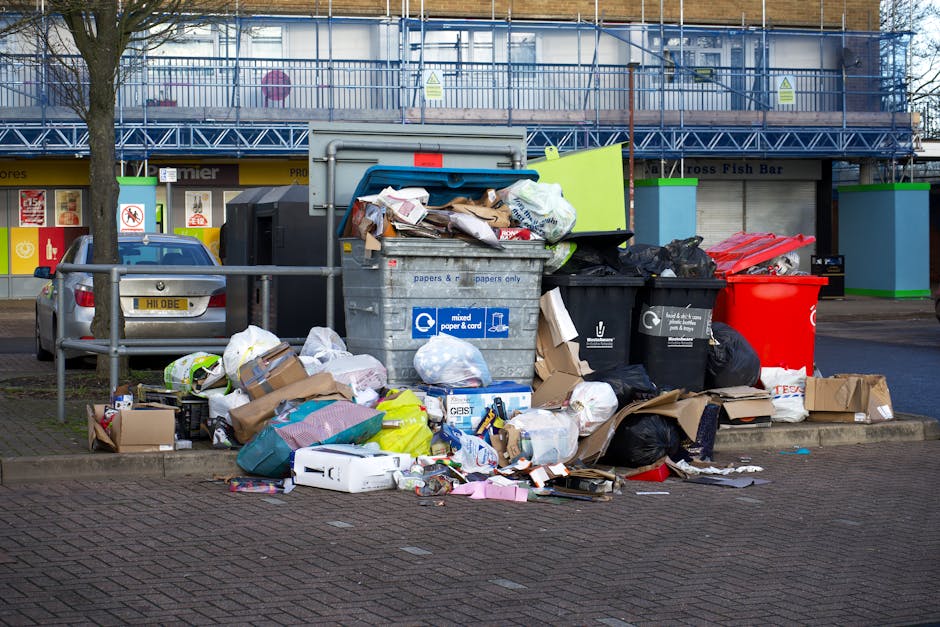
What to Know About Hoxton Bulky Rubbish Removal Access
If you are dealing with a sofa, wardrobe, mattress, broken desk, or a pile of mixed junk that has somehow grown legs and taken over the hallway, access is usually the part people underestimate. What to know about Hoxton bulky rubbish removal access comes down to a simple idea: the easier it is to reach the items, the faster, safer, and usually more cost-effective the clearance becomes. In Hoxton, where flats, narrow stairwells, basements, and shared entrances are common, a small access issue can change the whole job.
This guide explains what bulky rubbish removal access really means, why it matters, how the process works, and what you can do to make removal smoother. It also covers common mistakes, practical checks, compliance points, and a few real-world examples so you know what to expect before anyone turns up at the door.
Table of Contents
- Why bulky rubbish removal access matters in Hoxton
- How bulky rubbish removal access works
- Key benefits and practical advantages
- Who this is for and when it makes sense
- Step-by-step guidance
- Expert tips for better results
- Common mistakes to avoid
- Tools, resources and recommendations
- Law, compliance, standards, or best practice
- Options, methods, or comparison table
- Case study or real-world example
- Practical checklist
- Conclusion
- Frequently asked questions
Why Bulky Rubbish Removal Access Matters in Hoxton
Access is the difference between a tidy, straightforward collection and a job that becomes awkward halfway through. In Hoxton, that matters more than many people expect. Older buildings, stair-only properties, tight communal corridors, basement rooms, and parking restrictions can all affect how items are moved out. Even one bulky item, like a heavy corner sofa, can turn into a two-person lift, a slower route, and extra care around walls, banisters, and neighbours.
It also affects the type of vehicle or manpower needed. If items can be collected from the ground floor with good frontage access, the job is often simpler. If they need carrying down three flights of stairs, around a tight landing, and through a narrow doorway, the plan changes. That is not a problem, but it should be planned properly. Truth be told, this is where many people get caught out: they assume "bulky rubbish" just means "big item", when in practice it also means "how easy is it to reach?".
Access matters for safety too. Poorly planned lifting can damage furniture, walls, or the property itself. It can also create risk for the people doing the move. If you have ever watched someone try to wedge a mattress around a stair turn, you will know the sort of slow, slightly painful choreography involved. Not ideal.
Expert summary: In bulky rubbish removal, access is not a side detail. It shapes timing, effort, safety, and sometimes the whole method of collection. If you plan the access well, the rest tends to fall into place.
For household moves, clearances, or mixed waste removal, it may help to look at related services such as house clearance, flat clearance, or broader waste removal depending on what needs taking away.
How Bulky Rubbish Removal Access Works
At a practical level, access is assessed by asking a few simple questions: Where are the items located? How large and heavy are they? What routes are available? Is there parking close by? Are there locks, gates, codes, or concierge points to deal with? The clearer your answers, the smoother the collection tends to go.
Most access checks revolve around four things:
- Item location - ground floor, upper floor, loft, cellar, garden, shed, office, or garage.
- Route - stairs, lifts, corridors, door widths, turns, and any awkward bottlenecks.
- Vehicle access - whether a vehicle can stop nearby or if items need to be carried further.
- Site conditions - parking controls, loading restrictions, shared entrances, or fragile surfaces.
When a crew or clearance team knows this in advance, they can prepare the right number of people and the right approach. For example, a bulky wardrobe on a first floor may need dismantling before removal. A washing machine in a narrow utility room might need a safer route out through a side entrance. A set of broken office chairs in a basement storage area may require more time simply because of the walk distance and stairs.
If the access is easy, the job can feel almost deceptively simple. If it is not, the work is still possible, but planning matters more than muscle. That is usually the bit people remember afterwards.
What usually counts as good access?
Good access means the collection team can get to the items without unnecessary obstacles, unsafe lifting, or long carry distances. In practical terms, that often means:
- clear entry points
- wide enough doors and stair turns
- an available lift that can take the item
- reasonable parking or stopping space nearby
- items grouped together and ready to move
What makes access difficult?
Access becomes harder when items are spread across multiple rooms, stored in loft spaces, tucked behind other furniture, or blocked by clutter. Hoxton properties can also bring everyday London challenges such as shared hallways, permit parking, and busy streets. Even a few extra metres of carrying can slow things down more than people expect.
Key Benefits and Practical Advantages
Getting the access side right is not just about making the crew's life easier. It brings real benefits for you too.
- Faster removal - less time spent moving items around obstacles.
- Lower risk of damage - fewer scrapes on walls, floors, and door frames.
- Better safety - safer lifting and fewer awkward manoeuvres.
- Less stress - a calmer process on the day, especially if you are already juggling work, family, or a move.
- More accurate planning - the job can be quoted and scheduled more realistically.
There is also a hidden benefit: better access can improve how efficiently mixed waste is sorted for recycling. When items are easy to reach and separate, there is less chance of things being tossed into one pile and dealt with later in a rush. That matters if you care about responsible disposal, and many people do. If sustainability is on your mind, it is worth reading more about recycling and sustainability.
For homes with lots of furniture to move, the process is often simpler if the furniture can be described clearly in advance. That is why services like furniture clearance and furniture disposal exist separately from general rubbish removal. Different items, different handling, same need for decent access.
Who This Is For and When It Makes Sense
This topic matters to a lot of different people. If you are wondering whether it applies to you, the answer is probably yes if there is anything awkward to move.
- Homeowners clearing old appliances, furniture, or attic clutter
- Tenants needing to leave a flat tidy before moving out
- Landlords dealing with leftover items after a tenancy
- Letting agents organising clearance between occupancies
- Office managers clearing desks, chairs, filing cabinets, or archived material
- Tradespeople removing builders' rubble, packaging, or site debris
- Small businesses clearing storage rooms, stock overflow, or obsolete equipment
It also makes sense when access is the main unknown. Maybe you know what has to go, but you are not sure whether it can come out through the front door, the back gate, or the communal staircase. That uncertainty is very common. Better to ask than guess.
For example, a flat clearance may be straightforward until you realise the sofa does not fit around the stair landing. Then you need a plan B. A loft clearance can also be deceptively fiddly because the items may be light, but the access is the real issue. In those cases, planning access is more valuable than trying to "see how it goes".
If your situation is work-related, business waste removal and office clearance may be a better fit than a one-off household collection. Same principle, different setting.
Step-by-Step Guidance
Here is a straightforward way to prepare for bulky rubbish removal access in Hoxton.
1. Identify everything that needs to go
List the items room by room. Be honest about size and weight. "Small chest of drawers" and "very heavy chest of drawers" are not the same thing on a stairwell. If you are unsure, take a quick photo. Even a slightly blurry one is better than a vague description.
2. Check the route out
Walk the route from the item to the outside. Look for narrow doors, tight corners, low ceilings, railings, or anything that could snag. In a Hoxton flat, one awkward turn can matter more than a whole room of space.
3. Think about parking and stopping access
Where will the vehicle stop? Is it close enough for loading? Are there permit or loading restrictions? If the vehicle cannot park nearby, the carry distance becomes longer, and that affects the whole job.
4. Clear the space around the items
Move smaller objects, loose cables, plant pots, rugs, and other trip hazards out of the way. This is one of those tiny jobs that saves a lot of time later. It also reduces the chance of "just a second" turning into an awkward shuffle with a bookcase.
5. Flag any access limitations
Tell the provider about stairs, lifts, locked gates, concierge desks, time restrictions, or anything unusual. If a lift is out of service, or the item only fits with dismantling, say so early. Nobody likes surprises halfway through a clearance.
6. Confirm the collection plan
Once the access details are known, the plan can be set. That may include extra hands, tools, a different vehicle position, or item dismantling. If you are arranging a larger job, it can help to review the provider's pricing and quotes information so expectations are clear.
7. Keep the route open on the day
This sounds obvious, but it matters. Try not to block hallways, stairwells, or doorways after the plan has been agreed. If neighbours, porters, or building managers need to know, let them know. A calm five-minute conversation can save a messy thirty-minute delay. Nice when that happens.
Expert Tips for Better Results
A few practical habits make a big difference.
- Measure the awkward items - especially sofas, wardrobes, beds, and appliances.
- Take photos of access points - stairs, doors, and parking spots tell a story faster than words.
- Separate what can be reused - it helps with sorting and avoids accidental damage.
- Use the simplest route - sometimes the back entrance is better than the front, even if it feels less obvious.
- Tell the truth about access - if it is tricky, say so. It is better for everyone.
Another useful tip: do not leave access decisions until the collection team arrives. By then, the pressure is on, neighbours can be passing through, and the whole thing can feel rushed. That is usually when minor problems become major ones. A bit of preparation in the morning, even over a cup of tea, is often enough.
If you are clearing outside space as well, related services such as garden clearance or garage clearance can help if the access route runs through a shed, yard, or side passage.
Common Mistakes to Avoid
Most access problems are avoidable. The trouble is, they are usually the sort of thing people only notice once they are standing at the doorway.
- Assuming the item will fit without checking dimensions.
- Forgetting about the stair turn even when the doorway itself looks fine.
- Not mentioning a lift that is small, unreliable, or out of service.
- Leaving items scattered across several rooms or floors.
- Ignoring parking reality and hoping for the best.
- Underestimating weight - a bulky item can be far heavier than it looks.
- Failing to warn about fragile surroundings like glass panels, painted walls, or awkward corners.
A common one is the "it should be fine" approach. Sometimes it is fine. Sometimes not. In a narrow Hoxton stairwell, the difference between "fine" and "problem" can be a banister, a lamp, and five minutes of careful manoeuvring. Not dramatic, just real.
Another mistake is treating access as the same as size. A small item in a buried basement may be harder than a larger item on the ground floor. Access beats size more often than people think.
Tools, Resources and Recommendations
You do not need specialist equipment for every job, but a few simple tools can make access easier and safer.
- Measuring tape - for doors, hallways, and furniture widths.
- Phone camera - helpful for taking quick access photos.
- Labels or tape - useful when separating what is staying from what is going.
- Basic screwdriver or Allen key - often enough for small dismantling jobs.
- Gloves and sturdy footwear - especially if you are helping move items yourself.
- Clear communication notes - parking instructions, codes, gate details, and contact names.
On the service side, it is worth using a provider that is clear about payment, safety, and what happens to different waste types. You can check payment and security, health and safety policy, and insurance and safety for useful background before booking. That sort of transparency matters. It really does.
If you are still comparing options, the main question is not only "what can be removed?" but "how will it be removed?" For some households, a full home clearance is more efficient than booking multiple separate collections. For others, a focused item-based service is the better route.
Law, Compliance, Standards, or Best Practice
Bulky rubbish removal in the UK is not just a practical task; there are also legal and best-practice considerations. You do not need to become an expert in waste law to make a sensible booking, but it helps to understand the basics.
In simple terms, waste should be handled by a provider that manages it responsibly, sorts it appropriately, and disposes of it in line with applicable requirements. If you are a business, your responsibilities can be broader than those of a household. That may include keeping records, separating waste types, and ensuring the transfer of waste is handled properly. If this is a commercial setting, business waste removal is usually the right starting point.
Best practice also covers access and safety. That means:
- not blocking shared exits
- not forcing oversized items through unsuitable gaps
- protecting communal areas where possible
- using sensible lifting methods
- being honest about any hazards, including broken glass or unstable furniture
Insurance matters too. If items must pass through common parts, a properly insured approach gives everyone more confidence. You should also expect a provider to be open about what happens if access is more difficult than planned. The fair approach is simple: if the scope changes, the plan should change too.
For people dealing with building projects or renovation debris, builders waste clearance may be a better match than general bulky rubbish removal. Builders' waste has its own handling and access challenges, especially if it is being moved from upper floors or rear gardens.
Options, Methods, or Comparison Table
Different removal approaches suit different access situations. Here is a simple comparison.
| Method | Best for | Access requirement | Typical advantage |
|---|---|---|---|
| Single bulky item collection | One or two large items | Usually needs clear route and easy loading | Quick and focused |
| Flat clearance | Multiple household items in one property | Helpful when access can be planned in one visit | Efficient for larger clear-outs |
| House clearance | Whole-property clearances | Needs fuller access planning, often across several rooms | Good for inherited homes, downsizing, or end-of-tenancy needs |
| Office clearance | Desks, chairs, storage, archived items | May involve lifts, loading bays, or security access | Suited to commercial premises |
| Garden or garage clearance | Outdoor clutter, tools, broken items | Access via side paths, gates, or outdoor routes | Useful for awkward exterior spaces |
If you are mainly trying to remove one or two large items, a furniture-specific service may be the best fit. If you are dealing with an entire room or property, a broader clearance can be more efficient. The right option depends less on the size of the item and more on how the item gets out. That is the real question.
Case Study or Real-World Example
Consider a typical Hoxton flat clearance. The client has a three-seat sofa, a wardrobe, a mattress, and a broken coffee table to remove. At first glance, it seems simple enough. But the wardrobe does not turn cleanly at the stair landing, and the sofa is just a little too wide for the hallway when carried upright.
Once the access was reviewed properly, the job became easier to plan. The wardrobe was dismantled, the items were grouped near the front room rather than left in separate spaces, and the team used the wider route through the communal area after checking the door access first. Nothing dramatic happened. No heroics. Just a sensible plan, which is often the best kind.
In another everyday example, a small business clearing office storage discovered that the lift was too small for a large filing cabinet. Because this was spotted early, the cabinet was handled separately and the rest of the items went out through the lift as planned. That saved time, avoided damage, and kept the day moving.
These situations are common. The useful lesson is not that access problems are unusual, but that they are manageable when identified early.
Practical Checklist
Use this quick checklist before collection day:
- Have I listed every bulky item clearly?
- Do I know which route the items will take out?
- Have I measured the widest or tallest awkward items?
- Have I checked stairs, lifts, turns, and door widths?
- Is parking or stopping access clear?
- Have I told the provider about gates, codes, or building rules?
- Are smaller objects moved out of the way?
- Have I flagged anything fragile or hazardous?
- Do I know whether anything needs dismantling first?
- Have I kept the access route clear for the day?
If you can tick most of those off, you are in a good place. Not perfect maybe, but good enough for a smooth start.
Conclusion
What to know about Hoxton bulky rubbish removal access is really about preparation, honesty, and making the route out of the property as straightforward as possible. In a busy London area like Hoxton, access can shape everything from timing to safety to cost. The good news is that once you understand the basic checks, the process becomes far less stressful.
The simplest approach is to identify the items, map the route, mention any obstacles, and choose the right clearance method for the job. Do that, and most bulky removals feel far more manageable than they first appear. A little planning goes a long way, even if the flat is a bit cramped and the hallway looks like it was built for someone else entirely.
If you are comparing service options or want to understand what a responsible provider should cover, the most useful next step is to review the service details, safety information, and pricing expectations before you book.
Get a free quote today and see how much you can save.
Frequently Asked Questions
What does bulky rubbish removal access mean?
It means the route, space, and conditions needed to move large items out of a property safely. That includes stairs, doors, lifts, corridors, parking, and any other obstacle that affects collection.
Why is access such a big deal in Hoxton?
Because many properties in Hoxton have tight entrances, shared halls, stair-only access, or limited parking. Even a single awkward turn can affect how long a collection takes and whether dismantling is needed.
Do I need to measure my furniture before booking?
It is a very good idea, especially for sofas, wardrobes, beds, and appliances. Measurements help check whether the item will fit through doors and around stair turns without trouble.
What should I tell the removal team before they arrive?
Tell them where the items are, whether there are stairs or lifts, whether parking is difficult, and whether any item may need dismantling. The more honest the detail, the easier the day will be.
Can bulky items be removed from a flat with no lift?
Usually yes, but it depends on the item size, weight, and stair access. A no-lift property is not a deal-breaker, but it does need proper planning.
Is access more important than the number of items?
Often, yes. A single bulky item in a hard-to-reach space can be more difficult than several smaller items on the ground floor. Access often decides the effort involved.
What if my sofa will not fit through the hallway?
It may need to be dismantled or carried through an alternative route. If that is possible, it should be discussed before collection day so the right plan can be made.
How can I make collection day easier?
Clear the route, keep smaller items out of the way, confirm parking details, and give accurate access information in advance. Small steps, big difference.
Are there legal or safety issues I should know about?
Yes. Waste should be handled responsibly, and safe lifting, secure access, and proper disposal all matter. Businesses may also have extra waste-handling responsibilities.
What is the best option for a full property clear-out?
For a whole home or large set of items, a broader service such as house clearance or flat clearance is often more practical than arranging item-by-item removals.
Can garden or garage items create access problems too?
Absolutely. Side gates, narrow paths, muddy ground, and outdoor steps can all slow things down. Outdoor access can be just as tricky as indoor access, sometimes more so.
How do I know if I need builders waste clearance instead?
If the material is from renovation, demolition, or site work rather than household clutter, builders waste clearance is usually the better fit. The access questions are similar, but the waste type is different.
If you are still unsure about the right service, a sensible next step is to compare the job against your property layout and choose the option that best matches the route, not just the waste itself. That little bit of thought upfront can save a lot of hassle later.